Your skin gets SPF, serums, and a whole dedicated routine. Your hair? Probably the same shampoo and conditioner you’ve been using since college. Here’s the thing — hair ages the same way skin does. It thins, dries out, loses strength, and starts to look dull. The difference is that almost nobody talks about protecting hair from aging the way they talk about protecting skin.
Working with clients over the years, it becomes obvious very quickly which habits are quietly aging someone’s hair — sometimes by decades. And most of these mistakes are completely fixable. Some take five minutes to change. Others just require knowing what’s actually going on.
Let’s get into it.
Your Part Is in the Wrong Place
It sounds almost too simple, but where you part your hair changes how old your face looks — instantly, without a single product.
A longer, side-swept part reads as youthful and relaxed. A very short or center part tends to read as more formal and structured, which can add visual age to your face. This isn’t a strict rule, but it’s a detail that professional stylists pay close attention to when working with clients of different ages.
If you’ve been parting your hair in the exact same spot for years out of habit, try shifting it slightly to one side. The change in how your face is framed can be surprisingly dramatic — same hair, same length, just a different line.
You’re Using Too Many Products, Not Too Few
More products feel like more care. That’s the assumption most people operate on. But the opposite is often true.
Layering on creams, serums, gels, and sprays weighs your hair down. Heavy hair loses volume, goes limp, and needs to be washed more often as a result. Washing more often means stripping moisture more frequently — and that cycle of over-washing and over-product is one of the fastest ways to make your hair look dried out and aged.
The goal is a minimal routine built around high-quality products that actually do what they’re supposed to do. At its most basic, your hair has three zones that need care:
- Roots — cleansed and kept healthy by a good shampoo
- Mid-lengths — sealed and protected by a leave-in conditioner
- Ends — protected by a light hair oil that forms a moisture barrier
That three-step combination — shampoo, leave-in conditioner, hair oil — covers the core needs of almost any hair type without overloading it. Once you start adding creams and gels on top of that foundation, results tend to go backwards.
You’re Skipping Leave-In Conditioner (And Wondering Why Your Hair Is Dry)
If your hair is dry and you’ve already tried every moisturizing shampoo and conditioner on the shelf — this is probably the reason.
Rinse-out conditioner adds moisture to your hair temporarily. That’s all it does. The moment you rinse, most of that moisture starts to leave with the water. Leave-in conditioner is what actually holds the moisture in after the shower. Without it, you’re essentially filling a bucket with a hole in the bottom and wondering why it’s always empty.
People with dry hair almost always use conditioner. That’s rarely the gap. The missing piece is almost always leave-in conditioner — the product that locks in what the conditioner put there.
Using both together is how you keep hair moisturized all day, not just for the first 20 minutes after washing. If you’ve never made this part of your hair care routine, it’s worth starting there before changing anything else.
Your Tools Are Breaking Your Hair
Here’s a real example that shows how much this matters.
A client in her late 20s came in concerned because her hair had started thinning and breaking noticeably — something it had never done before. She hadn’t changed her products or her routine. Everything she was doing was the same as always.
After looking more closely, the problem wasn’t her routine at all. It was her tools.
She was using a rigid plastic comb through her lengths, which rips through tangles rather than flexing with them. Her hair tie was a standard elastic band — the kind that grabs and dents hair, and practically sheds broken strands every time you take it out. And she was drying her hair with a regular cotton towel, which creates friction and causes frizz and breakage that most people never connect back to towel-drying.
Three swaps made a significant difference within a few months:
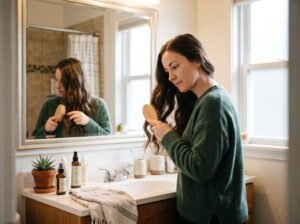
- Rigid comb → flexible bristle brush — flexible bristles bend when they hit a tangle instead of yanking through it, which dramatically reduces breakage during detangling
- Elastic hair tie → spiral hair tie (like Invisibobble) — the coil design makes less contact with hair, reducing dents and the broken strands that standard elastics cause
- Cotton towel → microfiber towel — microfiber is much smoother, creates far less friction, and doesn’t snag or rough up the hair cuticle the way terry cloth does
None of these changes are expensive. But the combined impact on breakage can be significant — especially if your hair has already started to weaken with age or damage.
Sun Damage Is Real, and Your Hair Is Getting It
Most people know the sun can lighten hair. What most people don’t know is why — and why that matters.
When UV rays hit your hair, they break down the pigment molecules inside the strand. That’s what causes the lightening effect. But the damage doesn’t stop at color. The same UV exposure also degrades the natural oils that keep your hair soft and pliable, and it breaks down the proteins that give your hair its structural strength. Over time, the result is hair that looks brittle, faded, and weathered — older than it actually is.
Hair sunscreen products do exist, but they tend to be heavy and build up quickly, which creates a different set of problems.
The most practical solution is covering your hair when you’re in direct sun for extended periods — especially in high-UV environments like beaches, mountains, or tropical climates. A hat or scarf provides full protection without any product residue.
If you’re spending time near the equator or somewhere with intense sun, try to limit direct sun exposure on your hair to around 15 minutes at a stretch. It adds up faster than most people expect.
Chasing Hair Trends That Don’t Suit You
Do you still wear a hairstyle just because you’ve seen it everywhere — not because it actually looks good on you?
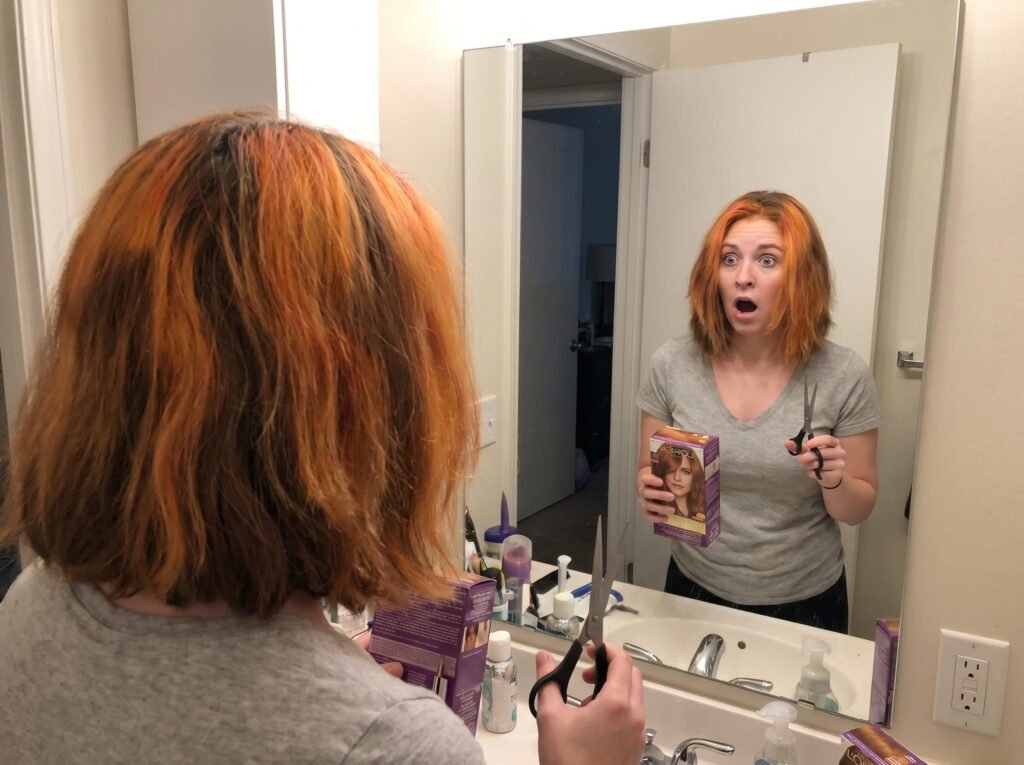
Trends move fast. What works on one person in a specific setting, with specific lighting and a specific face shape, rarely translates across the board. Trying to copy a trend that doesn’t suit your hair type, face shape, or lifestyle often leads to frustration, unnecessary chemical or heat damage, and a look that feels off without you being able to explain why.
This is especially true for trends that involve significant chemical processing — heavy lightening, aggressive coloring, drastic texture changes. Some of those trends require multiple sessions and ongoing maintenance just to sustain the look, and the cumulative damage to your hair can take months or even years to grow out.
The more useful question isn’t “is this trending?” It’s “does this work for me?” What flatters your face, suits your natural texture, and fits your actual lifestyle will always look better than whatever’s currently popular — and it won’t cost you the health of your hair in the process.
You’re Not Protecting Aging Hair When It Needs It Most
Hair naturally starts to thin as you get older. This is normal, and it happens to almost everyone. But there’s a range of options available now that didn’t exist a generation ago — and most people either don’t know about them or assume they’re not for them.
Hair Toppers
If you’re experiencing thinning at the crown or the top of your head, hair toppers are worth knowing about. These are hairpieces designed to sit over the top of your natural hair, blending seamlessly with what you already have.
The results can look completely natural — so much so that even people who are skeptical the first time they hear about them are often genuinely surprised by how good they look in practice. Talk to a stylist to find out whether this is a good fit for your specific type of thinning.
Extensions for Mid-Length and End Fullness
If the thinning is more throughout your lengths and ends rather than concentrated at the top, certain types of extensions can restore that fullness. Beaded extensions and hand-tied extensions are generally considered the gentler options. Tape-in extensions, on the other hand, are worth avoiding if your hair is already thin — the removal process can pull out fragile hair and create a cycle that’s genuinely difficult to reverse.
The Hormone Connection to Hair Health
This one doesn’t get talked about nearly enough, especially for women approaching or going through menopause.
Estrogen and progesterone play a direct role in hair growth. When hormone levels are healthy, hair grows well and stays in the growth phase longer. As these hormones decline — which happens gradually starting in the mid-30s and more significantly around menopause — hair can grow more slowly, shed more easily, and lose density over time.
Because hair grows slowly, damage and thinning can feel like they “appear” suddenly even though the underlying cause has been building for months. This is why the hair on your head can start looking notably different in your 40s compared to your 30s, even if your routine hasn’t changed.
Hormone replacement therapy (HRT) is something worth discussing with a doctor if you’re noticing changes in your hair alongside other symptoms like disrupted sleep, mood shifts, or energy changes. It’s a medical conversation, not a cosmetic one — but the effects on hair health are real and worth factoring in [consult your doctor for guidance specific to your situation].
What Anti-Aging Hair Care Actually Looks Like
The concept of an anti-aging hair care routine isn’t complicated. It’s really just giving your hair consistent, appropriate care rather than reactive or trend-driven care.
The “wrinkles” of hair aging are dryness and thinning. Both are largely preventable with the right habits and the right products used consistently over time. Going longer between washes — at least three days when possible — gives your hair time to recover from cleansing and heat. Starting heat styling on wash days only, rather than throughout the week, reduces cumulative wear significantly.
Switching to fewer, better products removes the weight buildup that forces more frequent washing. Adding a leave-in conditioner and a hair oil to your routine addresses the moisture gap that most dry hair is actually missing.
None of this requires spending a lot or doing a lot. It requires doing the right things consistently — which almost always means simplifying rather than adding more.