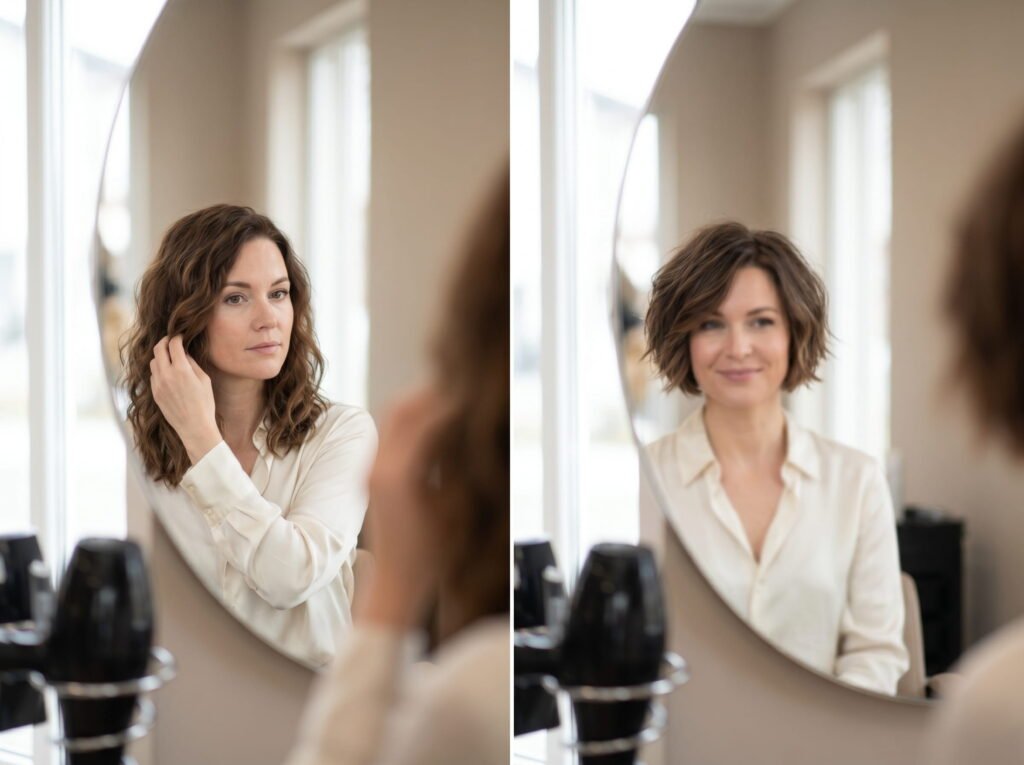
“Should I chop my hair?” is one of those questions that sounds simple but really, really isn’t. And if anyone tries to tell you “it’s just hair, it’ll grow back,” smile politely… and then ignore them completely. Because anyone who’s been through a haircut they hated knows: growing it out feels like a forever situation.
So before you make that appointment, let me walk you through the four things I genuinely think about before recommending a shorter length — whether it’s for myself or for someone else. Let’s get into it.
Point 1 — Your Face Shape And Body Proportions
In the world of hairstyling, there’s one face shape that’s considered the most balanced: the oval. Not because other shapes aren’t beautiful — they absolutely are — but because an oval silhouette has equal proportions, and that balance is what our eyes naturally find pleasing.
So what does that mean practically? It means the goal of a good haircut is often to create the illusion of that oval shape, whatever face you’re working with.
I once had a client with a soft, rounded face — beautiful woman, stunning features. She wanted a look with a centre part and loose waves. We went for it. And the result? The waves added width on the sides, the centre part flattened the volume on top, and suddenly her face looked shorter and wider than it actually was. Even though the hair itself looked gorgeous, something felt off — and she noticed immediately.
Point 2 — Your Hair’s Natural Texture
Texture isn’t just about whether your hair is straight or curly — it’s about thickness, density, weight, and how your hair behaves when gravity stops pulling it down.
The shorter you go, the more natural texture gets amplified. That’s because length adds weight, and weight suppresses volume. Cut that weight off, and whatever’s underneath comes to life. For some hair types, that’s amazing. For others, it’s chaos.
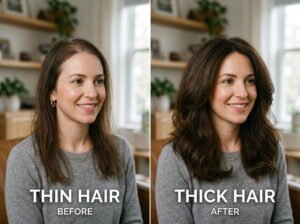
Fine, thin hair can struggle past a certain length — it starts to look flat, wispy, or damaged at the ends. Going shorter is often exactly what fine hair needs. It looks fuller, healthier, and easier to manage.
But thick, dense, or curly hair? Going short can mean serious volume — sometimes so much that the shape becomes unpredictable. I’ve seen people with very thick hair cut into a sleek bob, only to end up with something triangular and unruly because the hair expands outward once the length is gone.
Point 3 — Your Real Lifestyle And Styling Habits
Do you actually style your hair regularly? Not “sometimes on special occasions” — but as part of your daily routine?
Because some short haircuts require daily styling. Not optional styling. Daily. Pixie cuts, cropped bobs, anything chin-length or shorter — if you don’t do something with them in the morning, they’re going to look rough. That’s just the nature of shorter styles.
Point 4 — Does it Fit Your Personal Aesthetic?
This last one doesn’t get talked about enough.
Scroll through Instagram or Pinterest for five minutes and you’ll find hundreds of short haircuts that look incredible — on the people wearing them. The question is: does that person’s overall vibe match yours?
I’m talking about how you dress, how you do your makeup, what your general energy is. Hair doesn’t exist in isolation — it’s part of a whole look. A cool, edgy pixie cut reads completely differently on someone who wears vintage band tees and leather boots than it does on someone who lives in floral prints and minimal jewelry.
Neither is wrong. But they’re different, and the haircut that makes one person look effortlessly cool might feel completely out of character on another.
Final Wording
So before you go short, run through these four things: your face and body shape, your hair’s natural texture, your actual lifestyle, and whether the style fits who you actually are.
A good haircut isn’t just one that looks great in a photo — it’s one that works for your specific life. Take the time to think it through, communicate clearly with your stylist, and you’re so much more likely to walk out loving it.
I’ll see you in the next one.




One Response